This is a re-worked version of a post I wrote last month. If you read that one, don't bother with this one. I don't like editing posts after people have already left comments, so instead of just editing that one, on the advice of a friend, I'm putting this one out as the version of record.
Removed: a bunch of stuff about gendered spaces, which I blundered through last year, and, on the advice of said friend, which I'm going to leave alone until I have the tools and background to write on it more credibly. To sum up: I got it wrong before, perhaps got it less wrong with that last post, and I'm still working on getting it right.
Last week I came across a new term in my internettings: "Tumblr Feminist" -- this is a very obnoxious description of what that is (and the phrase's possible origin). This is the search of "tumblr feminist" on Reddit, where I came across the term. And the reddit thread "Explain Like I'm 5 What a Tumblr Feminist is" has this as the "top" (most upvotes) comment - a pretty good at-length description - and for its "best" comment (highest ratio of upvotes), a concise one:
"The perception is that tumblr users are passionate but not very informed on gender issues, so the term is used derogatively."
Tumblr feminist probably fits in a category with pejoratives like "armchair quarterback" and "slacktivist" and "Randroid"... but the term, strikes me as mean-spirited - more than those others.
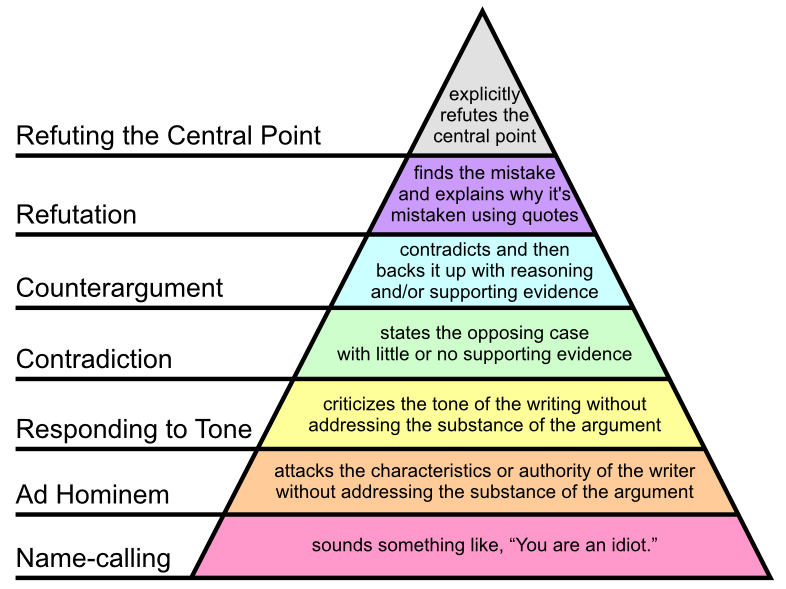
To be clear now, not every feminist on tumblr is a "tumblr feminist," just like not everybody linking events and causes on facebook are slacktivists (some back the "likes" up with action). The term seems reserved for the bottom rung or two of the hierarchy of disagreement (source), and not writers and thinkers who ply in the top section of the pyramid, those who've done their background reading, invested time and thought into making a meaningful contribution. But then, the term is not clearly defined, which makes it more useful for name-calling -- moving goalposts is an easy way to avoid taking responsibility for making generalizations.

The term "tumblr feminist" set off alarms right from the start. Google tricks (a keyword timeline search mostly) confirmed my suspicion: "tumblr feminist" was probably coined in that obnoxious youtube clip above: the first time that exact word combination appears is the month he published it. Subsequent mentions up until last month, when I suddenly came across it four or five independent times, had that same tone: contemptuous, and originating almost entirely in men's rights-type forums. It ventured outside of those realms mostly in response to comments or potshots from within it.
Since the start, the term has been used as a "straw man" (straw person) to whom people have ascribed the views they want to argue against -- basically, the Men's Rights folks have been using "tumblr feminist" the same way Fox News uses "the liberal media" or "the gay agenda" as a boogeyman. And that'd be the Men's Rights folks who use that flag to mostly act like sexist pricks, not the group that are said to exist, who have done all the same gender studies reading as feminists have, but are picking up the stories and issues on the male end of the gender spectrum. (As a side note, that latter group might do well to find a different name for themselves that doesn't confuse them with the former group. Perhaps one with enough jargon, or long enough, that online misogynists find it cumbersome to co-opt.)
In the last month though, people outside of Men's Rights forums have been using it in name-calling exchanges, in "am I really a TF?" "why ____ is a TF" or "I'm not a TF because" type blog posts. It's gained a little traction. Personally, I don't like that: labels are useful for introspection -- asking myself "is there mansplaining in this blog post/comment? Am I gaslighting?" But this label has been weaponized from the start, and using labels as weapons leads to defensiveness (follow-up with gaslighting), or anger (follow-up with tone policing) to derail conversations.

Along with its troublesome origins, my other problem with the term is this:
Every topic on the internet draws responses ranging from knee-jerk reactions to clear, informed reasoning, and discussion on every topic features too much knee-jerk and not enough clear, informed reasoning. Every single one.
Naturally, the same is true of women's issues. Writing that lacks clarity, rigor, or perspective? That's about 70% of the entire internet, isn't it? (That statistic is made-up. It might be more.) "Tumblr feminists" may or may not be an actual thing, but I know for sure I haven't heard a satisfying reason why they should be singled out over everybody else also using the internet less like this...
(Plato and Aristotle, by Raphael)

and more like this...
(Statler and Waldorf, by the Muppets)


Everybody's using the internet this way. Lots and lots and lots of men do. Every discourse has a few worthwhile voices and a lot of noise and people simply out of their depth. So if the group that becomes a target for derision is a subset of feminist writers (though if the term becomes common, wanna bet it remains reserved only for those feminist writers it originally applied to?) and they're simply acting the way most people (most men included) on the internet act, it's time for a motivation check. Does the simple existence of the term automatically indicate feminists, or women online in general, are singled out for persecution? Not all by itself, though given the term's origin (first yellow flag) and patterns of sexism on the internet (Food for thought. --Patterns which trace right back to the origins of the internet, when the photo used to test compression algorithms was part of a playboy centerfold) it'd be worth looking into. A cursory look around suggests that we might be onto something.
To tie this to Korea: it's like the __ __ 녀 or "ladygate" videos (more about Korea's online misogyny at Koreabang and Yonhap News): after a while, it stops seeming like a coincidence that every viral video about shameful public behavior features a woman behaving unacceptably, and we have to ask what's behind the singling out of women for shaming. You think men never fight, smoke, or act out drunk on subway cars? (You've never been on line 1, have you?) Yet it's the women doing the above whose videos go viral. Weeeird. Or maybe not.
I remember my first blog posts about Korea culture... they're painful to read, and full of mistakes and signs that I was way out of my depth, talking about stuff I didn't really know much about. My enthusiasm far outstripped my understanding. I got better: I learned more, and my comments got more moderate and thoughtful. I'm glad I didn't get too badly bullied, shamed, or disparaged, back there during my starting point... that would've sucked. If I had been using my blog for emotional catharsis, I hope nobody would have mistaken my writing for attempts at elevated discourse: that mismatch of expectations leads to misunderstandings, and people forget that not everybody who writes on the internet is actually doing it for an audience. I hope that as so-called "Tumblr feminists" use the internet to sort through, hash out, and ripen their ideas about gender issues, or just to vent pent-up emotions that their everyday life doesn't let them, their readers are as patient as mine were, or are discreet enough to look the other way, rather than singling them out for bullying and disparagement, the way a phrase like "Tumblr feminist" does. The internet is big enough, and there are enough people writing thoughtful, well-reasoned things about gender issues, that we don't have to seek out the "tumblr feminists" to pick on them, do we?
No. No. Nope. No, we don't.
Removed: a bunch of stuff about gendered spaces, which I blundered through last year, and, on the advice of said friend, which I'm going to leave alone until I have the tools and background to write on it more credibly. To sum up: I got it wrong before, perhaps got it less wrong with that last post, and I'm still working on getting it right.
Last week I came across a new term in my internettings: "Tumblr Feminist" -- this is a very obnoxious description of what that is (and the phrase's possible origin). This is the search of "tumblr feminist" on Reddit, where I came across the term. And the reddit thread "Explain Like I'm 5 What a Tumblr Feminist is" has this as the "top" (most upvotes) comment - a pretty good at-length description - and for its "best" comment (highest ratio of upvotes), a concise one:
"The perception is that tumblr users are passionate but not very informed on gender issues, so the term is used derogatively."
Tumblr feminist probably fits in a category with pejoratives like "armchair quarterback" and "slacktivist" and "Randroid"... but the term, strikes me as mean-spirited - more than those others.
To be clear now, not every feminist on tumblr is a "tumblr feminist," just like not everybody linking events and causes on facebook are slacktivists (some back the "likes" up with action). The term seems reserved for the bottom rung or two of the hierarchy of disagreement (source), and not writers and thinkers who ply in the top section of the pyramid, those who've done their background reading, invested time and thought into making a meaningful contribution. But then, the term is not clearly defined, which makes it more useful for name-calling -- moving goalposts is an easy way to avoid taking responsibility for making generalizations.
The term "tumblr feminist" set off alarms right from the start. Google tricks (a keyword timeline search mostly) confirmed my suspicion: "tumblr feminist" was probably coined in that obnoxious youtube clip above: the first time that exact word combination appears is the month he published it. Subsequent mentions up until last month, when I suddenly came across it four or five independent times, had that same tone: contemptuous, and originating almost entirely in men's rights-type forums. It ventured outside of those realms mostly in response to comments or potshots from within it.
Since the start, the term has been used as a "straw man" (straw person) to whom people have ascribed the views they want to argue against -- basically, the Men's Rights folks have been using "tumblr feminist" the same way Fox News uses "the liberal media" or "the gay agenda" as a boogeyman. And that'd be the Men's Rights folks who use that flag to mostly act like sexist pricks, not the group that are said to exist, who have done all the same gender studies reading as feminists have, but are picking up the stories and issues on the male end of the gender spectrum. (As a side note, that latter group might do well to find a different name for themselves that doesn't confuse them with the former group. Perhaps one with enough jargon, or long enough, that online misogynists find it cumbersome to co-opt.)
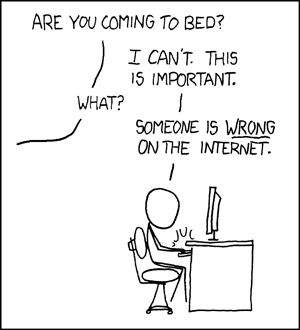
Along with its troublesome origins, my other problem with the term is this:
Every topic on the internet draws responses ranging from knee-jerk reactions to clear, informed reasoning, and discussion on every topic features too much knee-jerk and not enough clear, informed reasoning. Every single one.
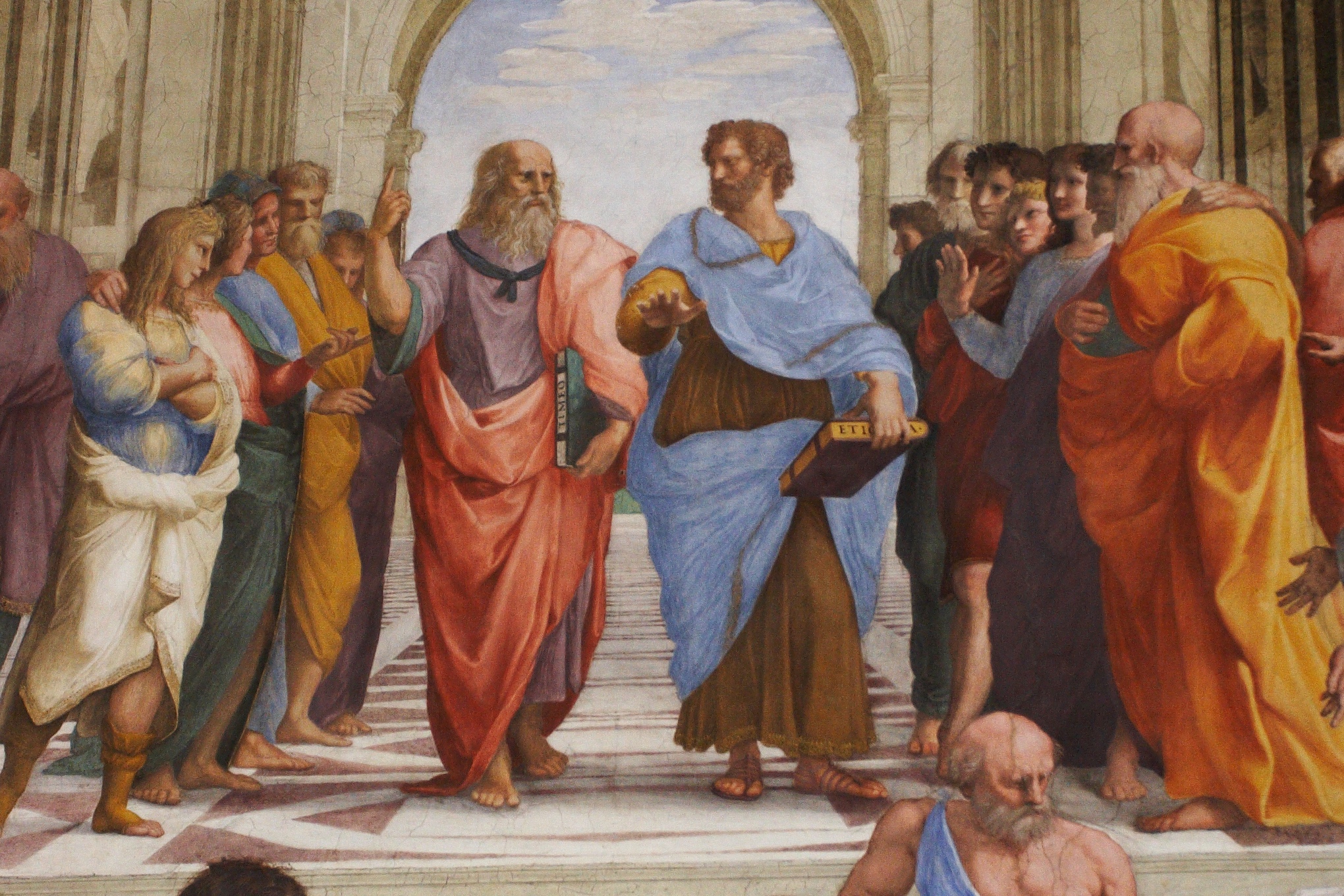
Naturally, the same is true of women's issues. Writing that lacks clarity, rigor, or perspective? That's about 70% of the entire internet, isn't it? (That statistic is made-up. It might be more.) "Tumblr feminists" may or may not be an actual thing, but I know for sure I haven't heard a satisfying reason why they should be singled out over everybody else also using the internet less like this...
(Plato and Aristotle, by Raphael)
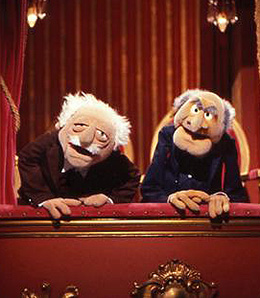
and more like this...
(Statler and Waldorf, by the Muppets)
or this.

To tie this to Korea: it's like the __ __ 녀 or "ladygate" videos (more about Korea's online misogyny at Koreabang and Yonhap News): after a while, it stops seeming like a coincidence that every viral video about shameful public behavior features a woman behaving unacceptably, and we have to ask what's behind the singling out of women for shaming. You think men never fight, smoke, or act out drunk on subway cars? (You've never been on line 1, have you?) Yet it's the women doing the above whose videos go viral. Weeeird. Or maybe not.
I remember my first blog posts about Korea culture... they're painful to read, and full of mistakes and signs that I was way out of my depth, talking about stuff I didn't really know much about. My enthusiasm far outstripped my understanding. I got better: I learned more, and my comments got more moderate and thoughtful. I'm glad I didn't get too badly bullied, shamed, or disparaged, back there during my starting point... that would've sucked. If I had been using my blog for emotional catharsis, I hope nobody would have mistaken my writing for attempts at elevated discourse: that mismatch of expectations leads to misunderstandings, and people forget that not everybody who writes on the internet is actually doing it for an audience. I hope that as so-called "Tumblr feminists" use the internet to sort through, hash out, and ripen their ideas about gender issues, or just to vent pent-up emotions that their everyday life doesn't let them, their readers are as patient as mine were, or are discreet enough to look the other way, rather than singling them out for bullying and disparagement, the way a phrase like "Tumblr feminist" does. The internet is big enough, and there are enough people writing thoughtful, well-reasoned things about gender issues, that we don't have to seek out the "tumblr feminists" to pick on them, do we?
No. No. Nope. No, we don't.