1. Most important first:
Down in Gyeongsan Province (around Busan) there's someone who needs a liver transplant, as well as O negative blood (kinda rare).
Brian in Jeollanamdo has more, including links to Waygook.org, and information about giving blood in Korea.
2. There are a handful of other great blog posts on the Suneung, Korea's high school exam.
The Korean has translated part of it, so that you can test yourself.
The test was easier this year, reports The Seoul Patch. More on that from Seoul Patch.
Bathhouse Ballads writes about the Suneung.
Stupid Ugly Foreigner Weighs In
3. This is a year old, but it deserves to be brought up again: It's a cartoon series on Flickr called "The Successful Life" drawn (if I remember correctly) by an actual Korean student, about how the Korean hagwon (rearranged into "Nowgah" in the article) turns kids into drones.
4. And from Youtube: a very cute shot in the arm for the test-writers, from 2AM and 2PM, two of K-pop's top boy bands.

one expat's life in Korea
Saturday, November 19, 2011

Tuesday, November 15, 2011
In Defense of The 수능 (Sunneung) the Korean College Entrance Exam, and other Really Hard Tests
(all images from memegenerator.net and http://highexpectationsasianfather.tumblr.com/)
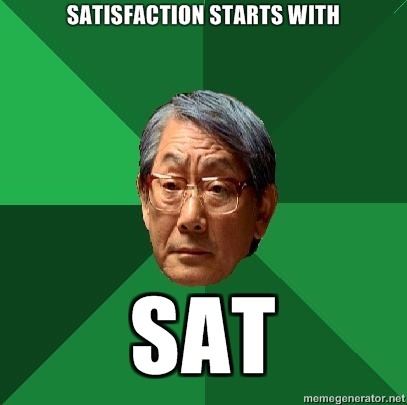
BBC had this to say about Korea's big test. The always-worth-reading Tom Coyner wrote this about Korea's hyper-competitive atmosphere.
And on blogs, and around bar tables, the expats who teach love to rip on Korea's test culture. Heard around the echo chamber:
1. All the smart peepuhl isn't good at do the test.
2. Multiple choice questions test memorization, not umberstanding.
3. Teaching toward the test makes a education the one-dimensional.
4. Students focused on test scores and rankings don't develop teh creativitys
blah blah blah.

As for the social implications:
1. Tests make teh suicide because pressure, bad score, and TEST, you know, right?
2. Studying all the tests wastes years of Korea's young people's time, robbing society of other contributions they could be making.
3. It makes Korea at hyper-competitive! Hurr durr.
4. It are make the advantage to the wealthy, who can afford to send their kids to private schools.
5. Its because credential society, man! Eberybody's just want the statuses and the prestiges!
6. They don't want to be happy! Just to make their mom get all teh bragging rights.
7. Korean moms is psycho, man. My kid Jaehee? His mom? Let me tell you...
Yes, I'm making fun of these memes. Not because they aren't partially true, but because they're been bled right to death on the blogosphere (my own blog included), and around every foreigner bar table in Korea.
Koreans know the system isn't perfect: even the President is talking about how we need to stop discriminating against non-college graduates. Success is too narrowly defined here. Everybody agrees that it should become socially acceptable to be a plumber or a welder or a mason or a sushi chef...

And that seems to be where we're stuck right now.
Further reading: (Korea Herald series on "Credential Society") -Education-elitism -Need for equal opportunities. -Privatize universities? -I honestly found these essays dissatisfying, but they'll familiarize you with the "credentialism" territory.
What's the Sunneung's role in this? (Warning: broad brushes ahead. I'm not an idiot, you're not an idiot, your mileage may vary, and all the usual qualifiers here. Reread paragraph five. Duh.)
Well, The Joshing Gnome, one of my favorite no-longer-publishing bloggers, wrote this a while ago about the tests.
Here are the most relevant paragraphs:
The Korean preoccupation with testing to me seems to serve one function first and foremost, before even its stated function of enabling meritocracy. The test serves as a (theoretically) objective measuring stick by which people can gauge one another’s worth. The system must necessarily be open.... Korean students spend the bulk of their educational career through high school studying for the suneung. The test is designed in such a way that its fairness is as unquestionable as possible. Needless to say that expensive private lessons are necessary to make top scores on the exam, although there is the potential for anyone, even the poorest student, to perform as well as their talent and studies permit them. Thus the exam is accepted as ‘fair’ on some level by the bulk of society.Multiple choice exams (though it's not all multiple choice now, is it?) have this going for them: you can run it through a scantron and no human needs to make a judgement call (which is then open to being disputed or questioned) at any point. That makes it "fair" insofar as it can be objectively proven that X correct answers is better than X correct answers minus one. And if everybody takes the test, and if everybody agrees on its importance and fairness, we can use it to rank people from highest to lowest.
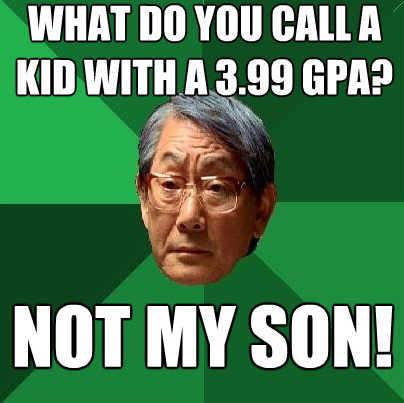
(Side note: the multiple choice exam I took this spring for my MacroEconomics course has left me assured that a multiple choice question can be as hard as, even harder than, an essay question. Y'all who think multiple choice is necessarily only memorization have simply never come across a really devious multiple-choice question artist. Some multiple choice exams are purely memorizing... but they certainly don't have to be.)
More Joshing Gnome:
After the suneung is over the grades come out. ...the vast majority of students score what they expected to score. These scores determine what universities the students will be accepted to, which determines much of the rest of their lives. Most of these students, even those who are disappointed with their scores, will admit that they are primarily to blame for their scores. They didn’t study enough, or well enough, or the right things. Maybe they’ll blame their family’s financial circumstances to a certain degree, but there will always be some fishing village boy with a widowed mother who ends up at Seoul National because of his outstanding suneung score to prove that the test is not the problem, you are.For the most part, working harder will result in a better score, and greater raw intelligence, amplified by more hard work, will result in a better score: the students going to Seoul National University are many of the smartest kids in Korea. I used to forget that during my mad rants. Some intelligences are harder to measure with a scantron than others, yes; some kids fall through the cracks (I probably would have)... but the scantron does measure intelligence plus diligence, and those who score well do deserve to go to a good university. Meanwhile, universities are adjusting their admission and recruiting criteria to reflect the fact tests aren't the only way to measure talent.

So why haven't these tests been abolished? Couldn't we just do that?
Korea has a very long tradition of Very Important Tests that might determine your entire future, but I'm not accepting sheer inertia for why they keep them around. Not in a country that has totally, cataclysmically reinvented itself about five times since 1890. Not in the country where people donated ten tons of personal possessions made of gold, in two fucking days, to help pay down its IMF debt. Not in the country that butted its way into the world's top fifteen economies after being a third world shithole as recently as 1960. If this country, with these people, decided they'd had enough of the tests, buddy, they'd be gone. I really believe that. So why are people keeping them around?
They must serve a purpose.
Here's my theory as to that purpose:
The tests are part of the system that enables Korean society to be rigidly hierarchical, yet egalitarian, at the same time. And it's important to be both in South Korea - Korea's hierarchical: from verb endings to drinking culture, from the first five questions people ask when they meet someone, to who pays for lunch, to who lights their cigarette first at the table, to the brands of handbag, shoe, and phone you have, from top to bottom Korean life is cluttered with big and small negotiations for, and deferences to, status.
Yet because (South) Korea's a democracy now, it must have equal opportunities (or at least the appearance of equal opportunities) for people to determine their own place on the ladder of who pulls rank on whom. And if people get locked into an icky rung of society, the fact it's rigid, yet also egalitarian, means that people will allow the system to perpetuate, hoping on the off-chance that their kid will make good, and swing the upward mobility they themselves never managed, and get pegged in a rigid high circle, rather than a rigid low circle (at which point the parents' status improves by association). Without at least the illusion of upward mobility, without that teasing hope that their kid just might do well enough on the sunneung to qualify for SNU's Law School, there'd be another revolution. WITH the hope their kid will be the one who games the system, people are willing to tolerate the system.
The Korean, of Ask A Korean! writes about the sheer viciousness of competitive society in Korea -- the ruthless dogfight for success. But that success becomes harder to measure if there aren't absolute, universally recognized signifiers of success, and the test helps to set those benchmarks of status.
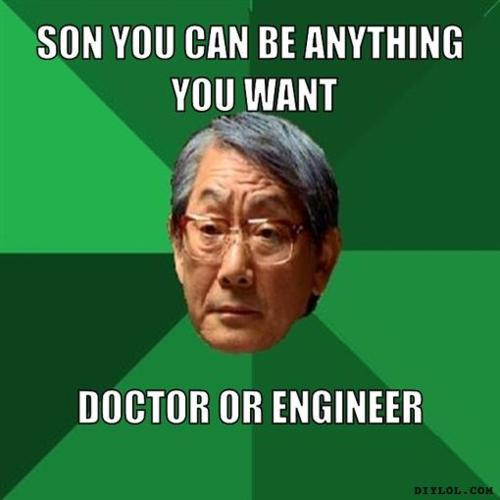
A ferrari is better than a porsche, which is better than a mercedes, which is better than a BMW, which is better than an Equus, which is better than a Chairman, which is better than an Audi, which is better than a KIA. Ask any Korean to name Korea's top three universities. Or top ten. Or seven best jobs. Or seven best restaurant chains. Ask ten Canadians, "What's a better job? Dental hygienist or flight attendant?" and you might get six of one, four of the other. Ask ten Koreans, you'll find a lot less variation. "What's a better job? Electrician or bank teller?"
If there is debate about what comes above and below what else, it becomes harder to flaunt my success. Or to brag about my kid's success, and lord my kids' success over my friends.
How bad is this jockeying for status? Did you know some Korean companies have been asking for applicants parents' jobs, to get a better grip of how to rank the person against other applicants? (Or perhaps to open the door for further nepotism and cronyism?)
Doctor, Lawyer, Professor, Diplomat.
are better than
Civil Servant, Public School Teacher, Chaebol employee, perhaps banker, Business owner
are better than
Medium or small sized company employee, small business owner
are better than
you get the picture...
These tests, and the status conferred by holding elite jobs that can only be procured through these impossibly hard tests, helps strengthen the matrix of status in which everyone fits somewhere.
But the genius of these tests is this:
because they're tests, anybody can take them, and anybody could be the one who passes. We don't talk about that a lot in the expat bars, but that's good.
The wealthy have more opportunity to take a year off and just study, but if you can find me a society where the wealthy don't have an advantage, I'll eat my hat. The test comes as close as you can get to eliminating the advantage the wealthy have in every other area, because even Chaebol Jr. has to take the test, sitting next to a Hayseed... or a Riceseed, I guess, from the rice paddy in Buttfuck Jeollado. And Riceseed might even beat out Chaebol Jr. -- the test is probably the only arena where those two are ever even remotely on a level playing field.
Chaebol Jr. could get streamlined into a sweet Chaebol gig, while young Riceseed's school, family, and connections would find him cut, but there's still prestige and honor to be had, if he can kick ass on a test.
(image source) No space on here for "do you know who my father is?"

If civil servant positions were chosen by interview and reference, I fear hiring practices would start resembling other sectors - 4:1 men to women being hired. But women are passing that test in equal, or higher numbers, than men. By sheer force of numbers, eventually that's going to change things in this country. Same with entry-level positions at law firms, where the bar exam, being gender-blind, gives women a fighting chance, and women are vastly outnumbering men on public school teaching jobs, which are nearly impossible to lose once you have one. Becoming a civil servant or public school teacher is one of the only careers a woman can have, where maternity leave is actually generous in Korea. And those jobs are highly respected in society. So if the Chaebol's still only hiring well-connected, handsome (did I mention the mandatory photo on job applications yet?) men who went to prestigious schools... to the study room!
The test ain't easy... but it creates a meritocracy, or at least the illusion of upward mobility, that there's a corner of Korean society where the rich and privileged can't change the rules to suit themselves and their heirs (at least not completely).

And that matters.
So the hierarchy stays in place, enabled by the supposed egalitarianism of the test system, so that everyone knows the rules to the system, so that Korean moms can compare everybody more easily, and so that even if I didn't achieve that upward mobility myself... I can dream that my kid might, and then I get to lord it over everybody in my sewing/screen golf circle. But I can only use those bragging privileges if the rigid hierarchy is in place, so they can't pull the rug on me by saying, "yeah, it's nice that your kid's an office drone in a world-class company... but have you seen the beautiful cabinets my son builds? I bet your son couldn't do that."
This is my hypothesis for now... it's untested, and in large part anecdotal - armchair anthropology at (its) best... so I'm looking forward to reading what people have to say in response to it. Tell me I'm wrong, but give me reasons I can think about.
Saturday, November 12, 2011
Seoul/Korea: Pluses and Minuses
I've got a longer post on the Sunneung in the works... that would have been timely the day I started it, but, you know, baby.
In the meantime, here's a great post "If I Had A Minute To Spare" wrote, asking if Seoul belongs on the list of "best Asian cities for expats." The article looks at the good and bad, and, in my opinion, is worth your time, as is the blog.
In the meantime, here's a great post "If I Had A Minute To Spare" wrote, asking if Seoul belongs on the list of "best Asian cities for expats." The article looks at the good and bad, and, in my opinion, is worth your time, as is the blog.
Wednesday, November 09, 2011
Mosquitoes: In Case You Forgot the World Sucks Sometimes
So...
Heres' the face Babyseyo made today when I kissed him on the cheek.

and you thought my blog would get cuter now that I had a baby.
But here's the reason for the title of this post: See those red dots?

No, he's not getting acne 13 years early. Those are mosquito bites, on my little baby's face. Wifeoseyo was muttering about 나쁜 모기 all morning that day. Mosquitoes are evil, friends. I am convinced that they were the first thing to come out of Pandora's box, that the first mosquito eggs dropped into a bit of stagnant water after Eve ate the forbidden fruit. And while it's wrong and cruel to kill some, perhaps many critters, I am convinced that mosquitoes exist outside of karma, and you're allowed to kill them without coming back as one in your next life.
The Dalai Lama told me so in a text message.
After spending a morning chasing a mosquito like Bill Murray and his gopher in Caddyshack, here's what I did:
I went to the old-style market nearest my house, and found the most cluttered-looking houseware shop -- the kind of place where you can buy dozens of containers and lids that don't match with any other container in your whole house.
Drew a picture of it, and got one of these.

Since then, I've been chasing mosquitoes around the house, swinging my magic battery operated bug zapper like Rafael Nadal, plus murder, and killing mosquitoes has never been so easy, or so fun. That electric crack when you know you got one? So, so, so satisfying.
4000 won without batteries. 6000 won with, and hours of useful fun.
Turns out burnt mosquitoes smell like burnt hair. Who knew.
Heres' the face Babyseyo made today when I kissed him on the cheek.
and you thought my blog would get cuter now that I had a baby.
But here's the reason for the title of this post: See those red dots?
No, he's not getting acne 13 years early. Those are mosquito bites, on my little baby's face. Wifeoseyo was muttering about 나쁜 모기 all morning that day. Mosquitoes are evil, friends. I am convinced that they were the first thing to come out of Pandora's box, that the first mosquito eggs dropped into a bit of stagnant water after Eve ate the forbidden fruit. And while it's wrong and cruel to kill some, perhaps many critters, I am convinced that mosquitoes exist outside of karma, and you're allowed to kill them without coming back as one in your next life.
The Dalai Lama told me so in a text message.
After spending a morning chasing a mosquito like Bill Murray and his gopher in Caddyshack, here's what I did:
I went to the old-style market nearest my house, and found the most cluttered-looking houseware shop -- the kind of place where you can buy dozens of containers and lids that don't match with any other container in your whole house.
Drew a picture of it, and got one of these.
Since then, I've been chasing mosquitoes around the house, swinging my magic battery operated bug zapper like Rafael Nadal, plus murder, and killing mosquitoes has never been so easy, or so fun. That electric crack when you know you got one? So, so, so satisfying.
4000 won without batteries. 6000 won with, and hours of useful fun.
Turns out burnt mosquitoes smell like burnt hair. Who knew.
Saturday, November 05, 2011
Links here and there... and gross.
The discussion on sexism in the blogs was really interesting... I'll have more to say about it in another post -- I actually learned (or at least realized) some stuff from it.
Here are a few other links I've come by this week, and liked.
Once again, Stupid Ugly Foreigner has written a great post, this time about turning from a fresh-faced expat to a grizzled long-termer. How did I go so long before I found this blog?
The Diplomat on North Korea's Clumsy Assassins: They sure don't make Nork assassins like they used to.
Which is a great excuse to post this old propaganda video of North Korean army training. I've got to say, I love the clipped accents and cadences of North Koreans speaking English.
After Ms. Lee to Be's post about Konglish, and how English buzzwords get mangled into Korean business speak, because it sounds awesome sand, Yujin Is Huge has this post about the overdone bombast that is often the other way Korean self-important people (who might understand English, but don't understand how English is used) express themselves... in a way that uses our language, but into which we don't actually figure at all. Title: A world-class provider of world-leading pioneer technology that will remain competitive through fundamental adaptation to the paradigm shift.
And... (warning: the following paragraphs contain opinion. If you are constitutionally opposed to the occasional gut reaction, do not read on. Look at this instead. Whoa.)
I went to Costco twice this week, once to get stuff, and once to return some of it... and I came across something that, honestly, grossed me out... as much as anything I've seen in my time in Korea.
As much as pigeons pecking at street pizza, as much as old men hocking loogies in the street... as much as middle-school girls hocking loogies in the street... I hadn't paid enough attention to notice it the last times I went to Costco, because I usually don't use the Costco restaurant, but on Monday I learned of the Costco Salad Bar.
What is the Costco Salad Bar?
Leave your dignity in your shopping cart.
Take a paper plate.
Go to the condiment table.
Grind the free onions into a small mountain in the middle of the plate.
Squirt a whole bunch of mustard on top of the onions.
Squirt between a little and a whole bunch of ketchup on there, too.
If you really feel fancy, squirt some of the sugar syrup meant for the coffee drinks on there, too.
If you ordered a hot dog, squeeze the pickle relish package in there, too.
Mix until it looks like chunky baby poop.
With fork, eat alongside whatever else you ordered.
Discard the uneaten 2/3, creating a disgusting mountain of wasted onions and mustard in the bottom of the compost can.
Ignore Costco employees watching you and performing facepalm after facepalm.
Leave dining area.
Collect dignity from shopping cart.
Resume ordinary life.
Image stolen from Zenkimchi.

Zenkimchi writes about it here: turns out this is not an isolated thing here in Korea. At the Costco I went to, about 30-55% of the tables had a Costco salad on one of the plates.
Normally, I just avoid the stuff I don't like or think is gross. I won't tell people not to eat this or that animal, or salad swimming in dressing, or the shredded cabbage/ketchup/mayonnaise gunk that was a side dish to the fantastic spit-roasted chicken at this place I used to go to. Avert the eyes, don't eat it, no sweat. but at least it was clear that's how you're supposed to eat the mayonnaise ketchup stuff, where Costco Salad reeks of "Hey! Free stuff!" (see also the equally classy Salad Bar Tower) -- both expressions of the same impulse that leads old ladies to bring ziplock bags to buffets, and stuff free plastic forks in their purse, and bend and twist the intended uses of things, just to maximize their exploitation of somebody's generosity in providing it for free.
Zenkimchi even posits an explanation, and manages to applaud the creativity -- fish gotta swim, birds gotta fly, Koreans gotta have banchan, and will find a way, you know. Intellectually, I acknowledge this, but it was still just too much for me. Next time I need a Costco hotdog, I'm bringing a blindfold.
Maybe because it looked like the baby poo that's become a major part of my life rhythm? Anyway, I'm willing to look for the reason and sense behind most things, to seek out a perspective and a context. But this one just grossed me out, still does, and I'll be setting up a mental block instead. Yech.
Here are a few other links I've come by this week, and liked.
Once again, Stupid Ugly Foreigner has written a great post, this time about turning from a fresh-faced expat to a grizzled long-termer. How did I go so long before I found this blog?
The Diplomat on North Korea's Clumsy Assassins: They sure don't make Nork assassins like they used to.
Which is a great excuse to post this old propaganda video of North Korean army training. I've got to say, I love the clipped accents and cadences of North Koreans speaking English.
After Ms. Lee to Be's post about Konglish, and how English buzzwords get mangled into Korean business speak, because it sounds awesome sand, Yujin Is Huge has this post about the overdone bombast that is often the other way Korean self-important people (who might understand English, but don't understand how English is used) express themselves... in a way that uses our language, but into which we don't actually figure at all. Title: A world-class provider of world-leading pioneer technology that will remain competitive through fundamental adaptation to the paradigm shift.
And... (warning: the following paragraphs contain opinion. If you are constitutionally opposed to the occasional gut reaction, do not read on. Look at this instead. Whoa.)

I went to Costco twice this week, once to get stuff, and once to return some of it... and I came across something that, honestly, grossed me out... as much as anything I've seen in my time in Korea.
As much as pigeons pecking at street pizza, as much as old men hocking loogies in the street... as much as middle-school girls hocking loogies in the street... I hadn't paid enough attention to notice it the last times I went to Costco, because I usually don't use the Costco restaurant, but on Monday I learned of the Costco Salad Bar.
What is the Costco Salad Bar?
Leave your dignity in your shopping cart.
Take a paper plate.
Go to the condiment table.
Grind the free onions into a small mountain in the middle of the plate.
Squirt a whole bunch of mustard on top of the onions.
Squirt between a little and a whole bunch of ketchup on there, too.
If you really feel fancy, squirt some of the sugar syrup meant for the coffee drinks on there, too.
If you ordered a hot dog, squeeze the pickle relish package in there, too.
Mix until it looks like chunky baby poop.
With fork, eat alongside whatever else you ordered.
Discard the uneaten 2/3, creating a disgusting mountain of wasted onions and mustard in the bottom of the compost can.
Ignore Costco employees watching you and performing facepalm after facepalm.
Leave dining area.
Collect dignity from shopping cart.
Resume ordinary life.
Image stolen from Zenkimchi.

Zenkimchi writes about it here: turns out this is not an isolated thing here in Korea. At the Costco I went to, about 30-55% of the tables had a Costco salad on one of the plates.
Normally, I just avoid the stuff I don't like or think is gross. I won't tell people not to eat this or that animal, or salad swimming in dressing, or the shredded cabbage/ketchup/mayonnaise gunk that was a side dish to the fantastic spit-roasted chicken at this place I used to go to. Avert the eyes, don't eat it, no sweat. but at least it was clear that's how you're supposed to eat the mayonnaise ketchup stuff, where Costco Salad reeks of "Hey! Free stuff!" (see also the equally classy Salad Bar Tower) -- both expressions of the same impulse that leads old ladies to bring ziplock bags to buffets, and stuff free plastic forks in their purse, and bend and twist the intended uses of things, just to maximize their exploitation of somebody's generosity in providing it for free.
Zenkimchi even posits an explanation, and manages to applaud the creativity -- fish gotta swim, birds gotta fly, Koreans gotta have banchan, and will find a way, you know. Intellectually, I acknowledge this, but it was still just too much for me. Next time I need a Costco hotdog, I'm bringing a blindfold.
Maybe because it looked like the baby poo that's become a major part of my life rhythm? Anyway, I'm willing to look for the reason and sense behind most things, to seek out a perspective and a context. But this one just grossed me out, still does, and I'll be setting up a mental block instead. Yech.
Subscribe to:
Posts (Atom)